The Porsche 911 GT3 represents one of the purest expressions of performance within the legendary 911 family. While many modern sports cars chase ever-larger horsepower figures, the GT3 follows a more focused philosophy: combine high-revving performance, exceptional chassis engineering, advanced aerodynamics and direct driver involvement.
Developed with strong connections to Porsche’s motorsport experience, the 911 GT3 sits between a road-going sports car and a track-focused performance machine. It remains usable on public roads while incorporating technology designed to perform under demanding driving conditions.
For enthusiasts, the attraction of the GT3 goes far beyond acceleration figures. Its naturally aspirated flat-six engine, distinctive sound, precise steering, aerodynamic design and carefully engineered chassis give the car a character that is increasingly rare.
At TechWorldsHub, we’re taking a closer look at what makes the Porsche 911 GT3 such an important performance car.
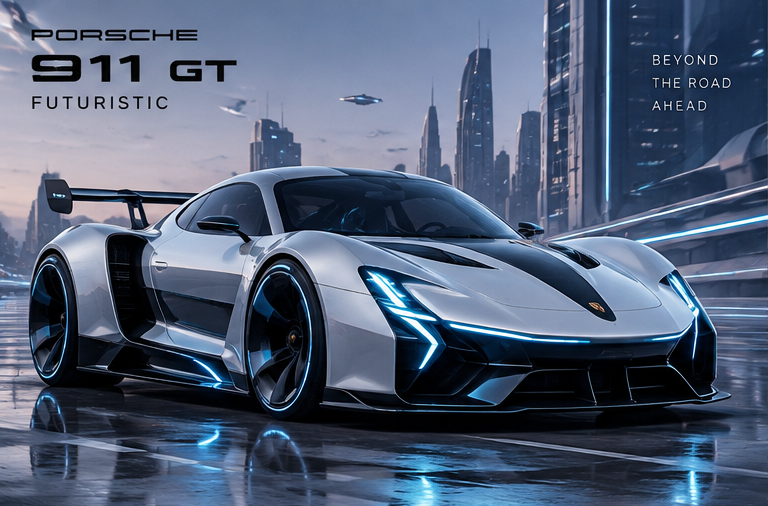
Porsche 911 GT3 at a Glance
| Feature | Porsche 911 GT3 |
|---|---|
| Vehicle Type | High-performance sports car |
| Engine Layout | Rear-mounted naturally aspirated flat-six |
| Displacement | Approximately 4.0 liters |
| Maximum Power | Around 500+ hp, depending on model/version |
| Transmission | PDK automatic or manual, depending on configuration |
| Drivetrain | Rear-wheel drive |
| Engine Character | High-revving naturally aspirated |
| Key Focus | Road and track performance |
| Aerodynamics | Performance-focused aero package |
| Rear-Wheel Steering | Available/used on modern GT3 generations |
| Seating | Primarily two-seat performance configuration |
| Manufacturer | Porsche |
Specifications can vary by model year, market and configuration.
A Different Kind of Performance Car
The modern performance-car market contains machines producing extraordinary horsepower.
Some rely on turbocharged engines. Others combine combustion engines with electric motors, while high-performance EVs can generate immediate torque from multiple electric motors.
The Porsche 911 GT3 takes a different approach.
Instead of focusing exclusively on maximum straight-line performance, Porsche concentrates on the relationship between the driver, engine, chassis and road.
The GT3’s naturally aspirated engine is central to that philosophy.
Without turbochargers fundamentally defining its power delivery, the engine is designed to reward drivers who explore the upper part of its rev range.
The experience becomes progressively more dramatic as engine speed increases.
For many enthusiasts, that interaction is exactly what separates the GT3 from less focused performance cars.
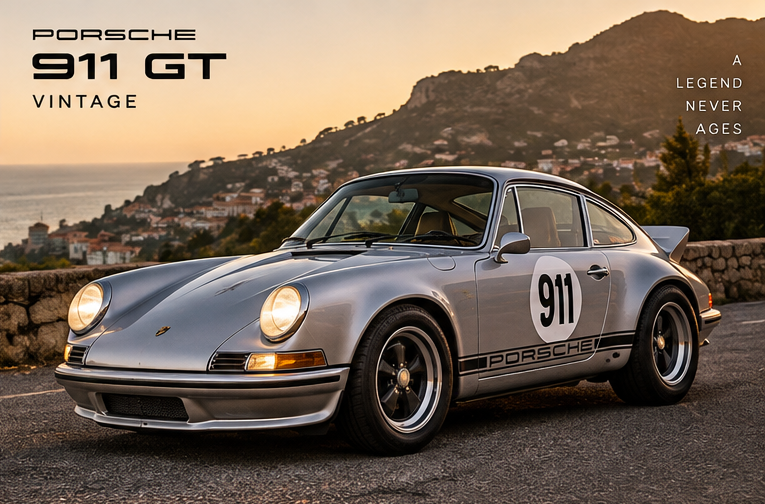
The Naturally Aspirated Flat-Six Engine
The Heart of the GT3
One of the defining characteristics of the Porsche 911 GT3 is its naturally aspirated flat-six engine.
The flat engine layout has been closely associated with the Porsche 911 for generations.
In a flat-six configuration, cylinders are arranged horizontally on opposite sides of the engine. This helps create a relatively low engine profile and contributes to the distinctive character of the 911.
In the GT3, Porsche takes this concept and develops it specifically for high-performance driving.
Rather than relying heavily on forced induction to create enormous low-RPM torque, the engine encourages drivers to use its rev range.
Throttle response is particularly important.
A naturally aspirated performance engine can provide an immediate connection between accelerator movement and engine response, contributing to the GT3’s reputation as a driver’s car.
And then there is the sound.
As engine speed rises, the GT3 develops the unmistakable mechanical soundtrack that has become one of its defining characteristics.
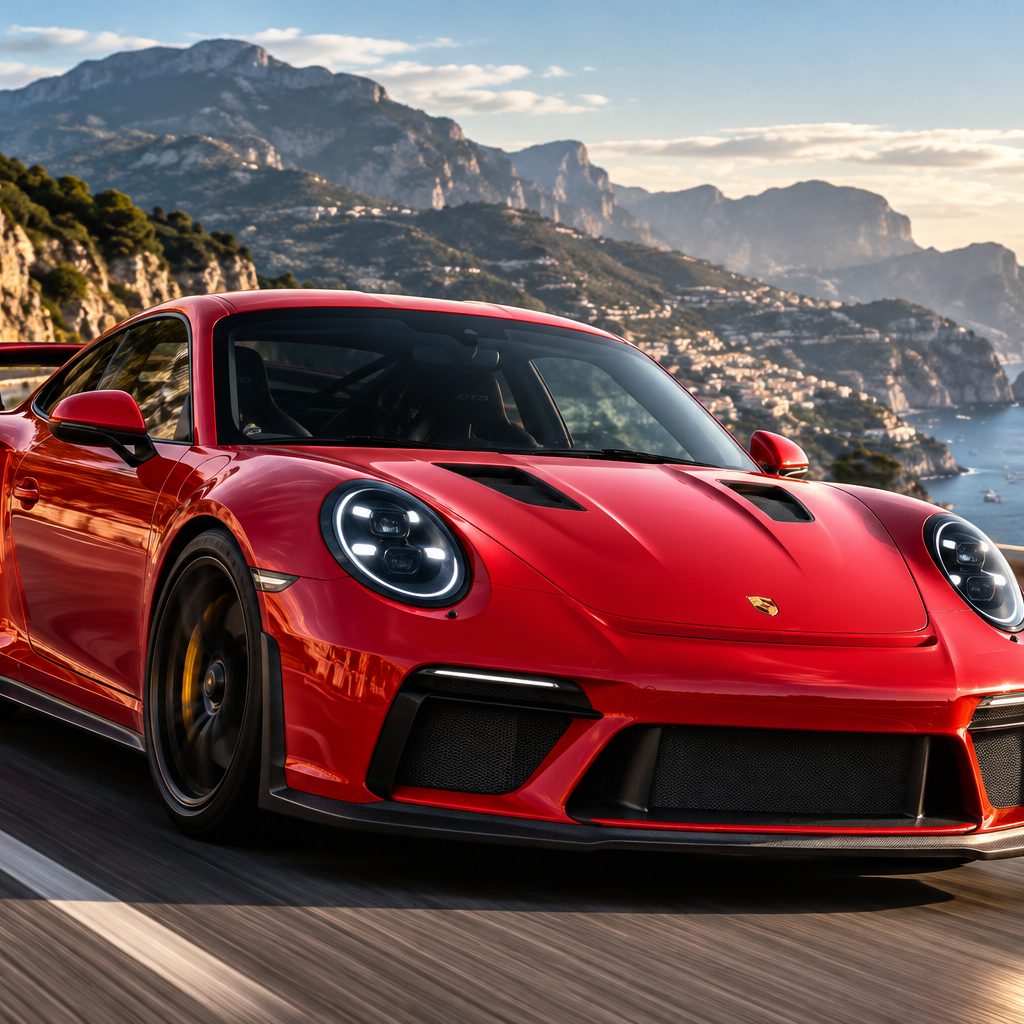
Manual or PDK?
Another reason the GT3 attracts enthusiasts is the availability, depending on version and market, of different transmission experiences.
Porsche’s PDK dual-clutch transmission is designed to shift extremely quickly.
For drivers focused on lap times and maximum performance, rapid gear changes can provide a meaningful advantage. The transmission can keep the engine within its optimal operating range while minimizing interruption to acceleration.
A manual transmission offers something different.
It requires greater driver involvement.
Changing gears becomes part of the experience rather than an operation performed almost instantaneously by the vehicle.
The faster option is not automatically the most enjoyable option for every driver.
That choice reflects the broader GT3 philosophy: performance is important, but interaction matters too.
Aerodynamics Designed for Performance
The GT3’s aggressive appearance isn’t simply styling.
Aerodynamics play a major role in its design.
At higher speeds, managing airflow becomes increasingly important. Engineers need to reduce unwanted lift, maintain stability and generate useful aerodynamic load without creating excessive drag.
Depending on the GT3 generation and configuration, aerodynamic elements can include a substantial rear wing, front aerodynamic components, carefully shaped underbody sections and other airflow-management features.
These elements help the car remain stable during demanding high-speed driving.
The rear wing is particularly recognizable.
It immediately distinguishes many GT3 models from less track-focused 911 variants, but its purpose extends beyond appearance.
The objective is to make airflow contribute to performance.
Chassis Engineering
Horsepower Is Only Part of the Equation
A performance car can have an extraordinary engine and still disappoint if its chassis cannot use the available power effectively.
This is an area where the GT3 philosophy becomes particularly clear.
Suspension geometry, damping, steering, tire behavior, weight distribution, braking and electronic control systems all influence how confidently a driver can use the car’s performance.
Porsche engineers the GT3 around cornering capability and feedback rather than simply straight-line acceleration.
Modern GT3 generations have introduced increasingly sophisticated suspension solutions derived partly from Porsche’s motorsport knowledge.
The result is a car intended to remain composed during aggressive direction changes while communicating what the tires and chassis are doing.
That communication matters.
A fast car can become significantly more rewarding when the driver understands how close it is to its limits.
Rear-Wheel Steering
Rear-wheel steering is one of the technologies used to increase the 911 GT3’s agility and stability.
At lower speeds, the rear wheels can steer in a direction that effectively helps the car change direction more easily.
At higher speeds, the system can operate differently to improve stability.
The driver doesn’t need to manually control any of this.
The system works as part of the vehicle’s overall chassis technology.
It is an excellent example of modern electronics enhancing a fundamentally mechanical driving experience without necessarily dominating it.
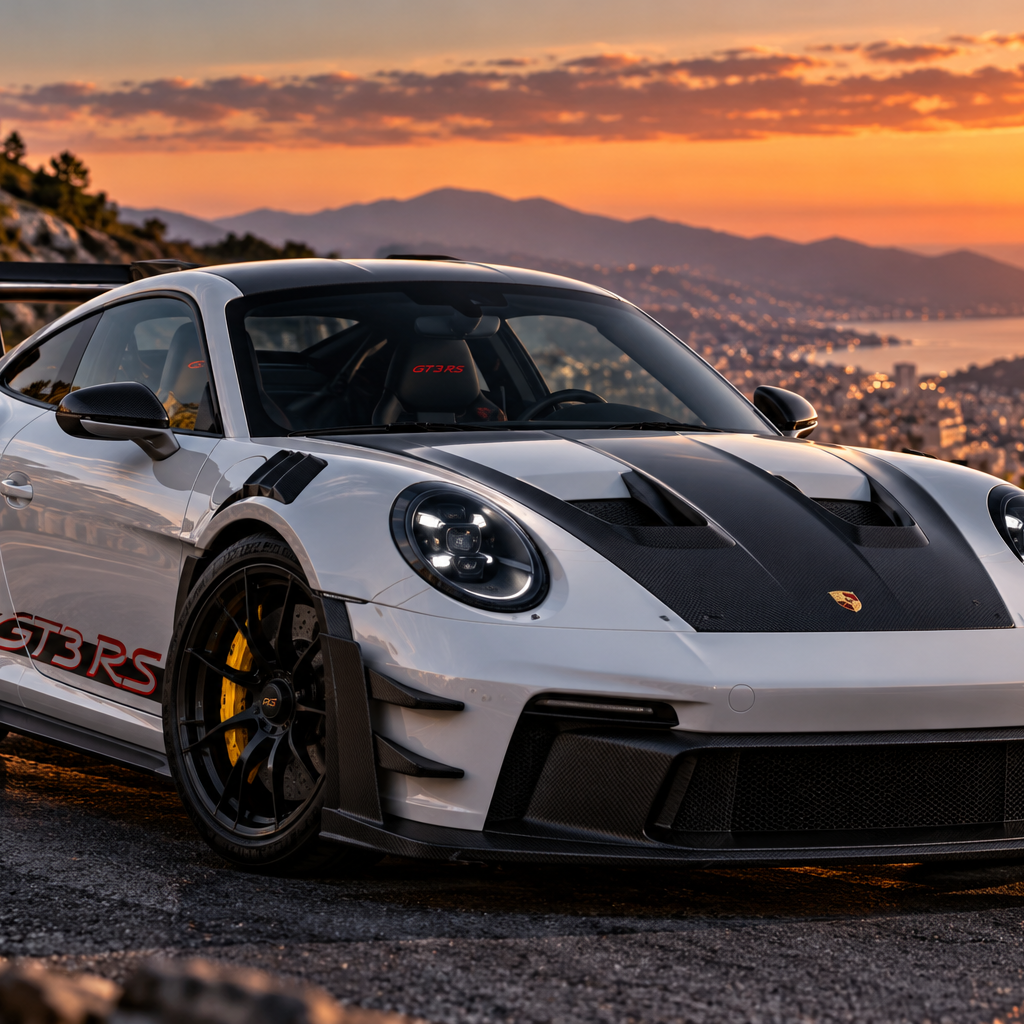
Serious Braking Performance
Going fast is only useful if the car can repeatedly slow down with confidence.
Track driving creates enormous demands on braking systems.
Repeated heavy braking generates substantial heat, and a performance braking system needs to manage those temperatures while providing consistent pedal response.
The GT3 uses serious braking hardware appropriate for its performance capabilities, with higher-end braking options available depending on configuration.
Carbon-ceramic braking technology may also be available in certain configurations.
Beyond raw stopping ability, braking feel matters enormously in a track-focused sports car.
Drivers need to understand how much braking force they are applying and how the car is responding.
That feedback can make braking one of the most satisfying parts of driving a well-engineered performance car.
A Motorsport-Inspired Interior
Step inside a GT3 and the relationship with motorsport becomes more apparent.
The cabin remains recognizably Porsche 911, but the emphasis is on driving.
The seating position, steering wheel, instrumentation and controls are designed to keep important information accessible.
Depending on configuration, buyers may have access to more aggressively shaped seats and other performance-focused options.
Digital technology has naturally become part of newer 911 interiors, but the GT3 remains centered around the driver.
This balance is important.
A modern performance car needs technology, but technology shouldn’t distract from the reason the car exists.
In the GT3, the road—or racetrack—remains the main attraction.
Porsche 911 GT3 vs a Conventional Sports Car
| Area | 911 GT3 Approach | Conventional Sports Car |
|---|---|---|
| Engine | High-revving, naturally aspirated focus | Often turbocharged |
| Primary Goal | Driver involvement + track performance | Broader everyday performance |
| Aerodynamics | Extensive performance-focused aero | Usually less aggressive |
| Suspension | Track-oriented engineering | More comfort-oriented |
| Transmission | PDK/manual depending on version | Automatic/manual varies |
| Brakes | Designed for demanding performance use | Usually less track-focused |
| Interior | Driver-centered | Often greater comfort emphasis |
| Character | Motorsport-inspired | Road-focused |
The comparison demonstrates why the GT3 isn’t simply a faster version of an ordinary 911.
Its entire engineering philosophy is different.
GT3 vs GT3 RS
The 911 GT3 RS takes the GT3 philosophy significantly further toward track performance.
While the GT3 attempts to maintain a remarkable balance between road usability and circuit capability, the GT3 RS places greater emphasis on aerodynamics, weight optimization and track-focused engineering.
The RS is typically visually more extreme.
Its aerodynamic package can be substantially more aggressive, with large wings, vents and other components designed to manage airflow.
For someone primarily interested in maximum track capability, the RS represents the more extreme proposition.
For drivers who want an extraordinary track-capable machine while preserving more of the traditional road-going GT3 experience, the standard GT3 can be particularly appealing.
Neither philosophy is automatically better.
They simply prioritize the performance experience differently.
Can You Drive a GT3 Every Day?
Technically, the GT3 remains a road car.
That is part of what makes it fascinating.
It provides performance and engineering associated with track driving while retaining the ability to operate on ordinary roads.
However, everyday usability depends heavily on what a driver expects.
Its suspension and seating can be more focused than those of a normal road car. Ground clearance requires greater attention. Road noise and ride comfort may not match luxury-oriented 911 variants.
Cargo space is naturally limited compared with conventional vehicles.
But those compromises are part of the GT3’s character.
It was never designed to be the most comfortable 911.
It was designed to be one of the most engaging.
Why the Porsche 911 GT3 Is Special
Modern performance cars are becoming incredibly sophisticated.
Turbocharging produces enormous power.
Hybrid systems add electric assistance.
Electric vehicles can achieve extraordinary acceleration.
Software manages increasingly complex vehicle systems.
Against this background, the GT3’s philosophy feels almost unusual.
It combines modern chassis technology and sophisticated electronics with a naturally aspirated, high-revving engine and a strong focus on driver involvement.
That combination gives the car its identity.
It doesn’t need to win every specification comparison to be significant.
The GT3’s purpose is to make driving memorable.
Final Thoughts
The Porsche 911 GT3 demonstrates that great performance cars are about much more than horsepower.
Its appeal comes from the relationship between its naturally aspirated flat-six engine, chassis, aerodynamics, braking system, steering, transmission and driver.
Every major component contributes to a single objective: creating an engaging performance experience.
There are faster cars.
There are more powerful cars.
There are more technologically extravagant cars.
But very few combine modern engineering with traditional driver involvement in quite the same way.
As the automotive industry moves deeper into electrification, software-defined vehicles and increasingly automated technology, cars like the GT3 demonstrate why the emotional side of automotive engineering still matters.
For enthusiasts who value precision, sound, response and connection, the Porsche 911 GT3 remains one of the most fascinating driver’s cars in the modern automotive world.
TechWorldsHub — Cars. Performance. Technology. The Future.