AUTOMOTIVE TECHNOLOGY
The Technology Driving Tomorrow
The automotive industry is experiencing one of the greatest technological transformations in its history.
Cars are no longer defined only by engines, transmissions, suspension systems, and mechanical engineering. Modern vehicles combine powerful computers, sophisticated software, artificial intelligence, advanced sensors, electric powertrains, digital displays, connectivity, and intelligent safety systems.
At TechWorldsHub, our Technology section explores the innovations changing the way vehicles are designed, manufactured, driven, and experienced.
From electric vehicles and next-generation battery technology to autonomous driving, artificial intelligence, connected cars, advanced infotainment, and performance engineering, automotive technology is developing at an extraordinary pace.
Some innovations are designed to make cars faster. Others improve safety, efficiency, comfort, or convenience. Many are completely changing the relationship between drivers and their vehicles.
Welcome to TechWorldsHub Automotive Technology—where engineering meets the future.
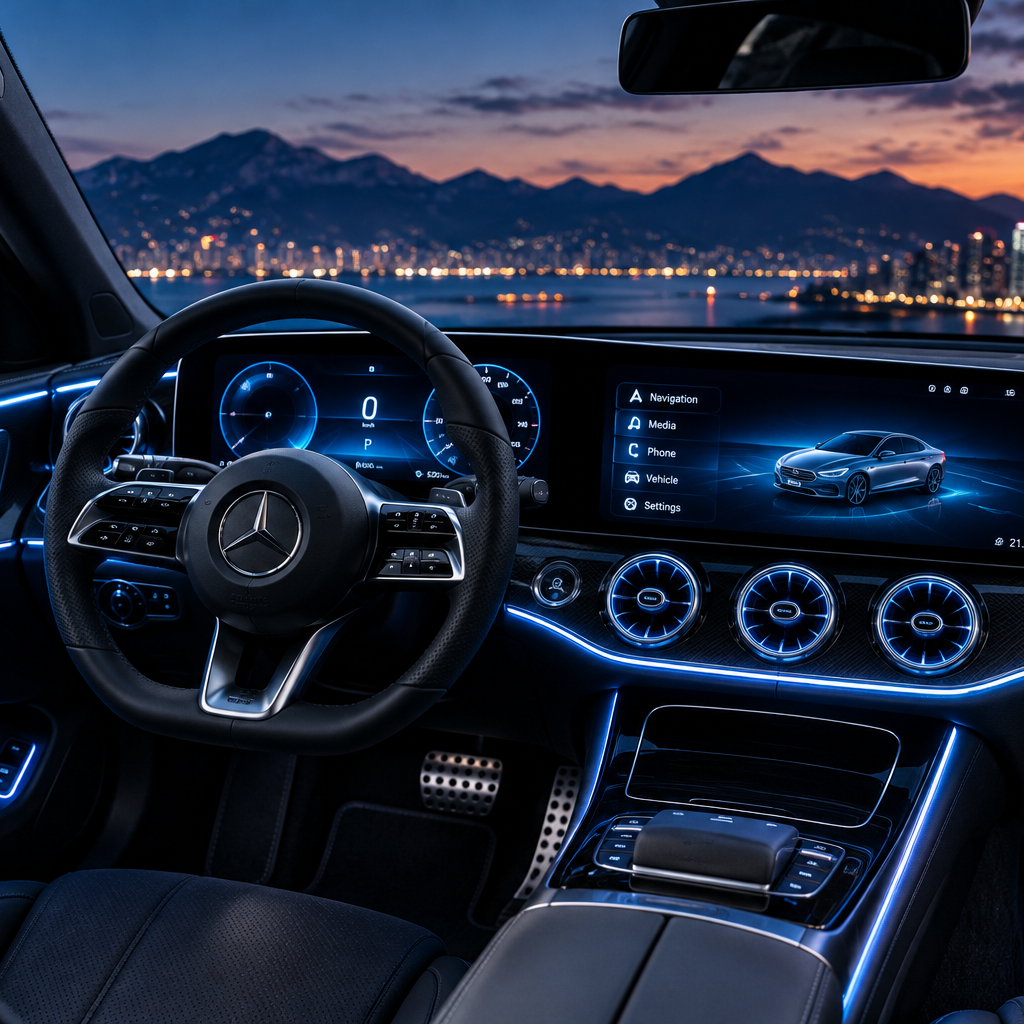
The Future of Automotive Technology
Smarter. Faster. More Connected.
For much of automotive history, technological progress centered primarily around mechanical engineering.
Manufacturers developed more powerful engines, stronger transmissions, improved suspension systems, better brakes, and more efficient manufacturing techniques.
Mechanical innovation remains extremely important, but another revolution is now happening alongside it.
Software has become one of the most important components of a modern automobile.
A single vehicle can contain numerous electronic control units responsible for managing everything from engine operation and battery temperature to suspension settings, braking systems, infotainment, lighting, climate control, and safety features.
Vehicles are also becoming increasingly connected.
Some cars can communicate with smartphone applications, download software updates, access cloud-based services, provide real-time navigation information, and remotely control certain vehicle functions.
This transformation has created an entirely new automotive landscape.
The car of the future will not simply be a mechanical machine.
It will be an intelligent, connected technological platform.
Electric Vehicle Technology
Reinventing the Powertrain
Electric vehicles represent one of the most significant changes happening across the automotive industry.
Instead of relying on a traditional internal-combustion engine, an EV uses electric motors powered by energy stored inside a battery pack.
The fundamental idea may sound simple, but modern electric powertrains involve extremely sophisticated engineering.
Battery cells must store enormous amounts of energy while remaining reliable and safe.
Power electronics must precisely control electricity flowing between the battery and electric motors.
Thermal-management systems need to maintain suitable temperatures during charging, everyday driving, and demanding performance situations.
Software continuously monitors these systems to maximize efficiency and protect important components.
Electric motors also behave differently from combustion engines.
They can provide strong torque almost immediately, which is one reason many modern EVs can accelerate extremely quickly.
There is no need to wait for an engine to reach a particular RPM range before maximum torque becomes available.
This immediate response has allowed electric vehicles to challenge traditional performance cars in straight-line acceleration.
But acceleration is only one part of EV technology.
Range, efficiency, charging speed, battery durability, thermal management, weight, and software optimization are equally important.
Battery Technology
The Heart of the Electric Vehicle
The battery is one of the most important and expensive components of an electric vehicle.
Its capacity influences how much energy the vehicle can store, while efficiency helps determine how far the car can travel using that energy.
However, simply installing a larger battery is not always the perfect solution.
Larger battery packs generally increase weight and cost.
Additional weight can affect handling, braking, tire wear, and efficiency.
Manufacturers therefore need to balance battery capacity against the overall design of the vehicle.
Battery chemistry is another important area of development.
Different battery chemistries can offer different combinations of energy density, cost, longevity, thermal characteristics, and performance.
Engineers are constantly searching for ways to store more energy in smaller and lighter packages while maintaining safety and durability.
Battery-management systems also play an essential role.
These systems monitor battery temperature, voltage, charging behavior, and numerous other parameters.
Good battery management can improve performance, charging consistency, efficiency, and long-term reliability.
As battery technology continues improving, electric vehicles should become increasingly capable and practical.
EV Charging Technology
Making Electric Driving More Convenient
Range receives enormous attention when discussing electric vehicles, but charging technology can be equally important.
An EV with impressive range but extremely slow charging may be inconvenient during long journeys.
Modern electric vehicles can support several forms of charging depending on the vehicle and infrastructure available.
Home charging is particularly convenient for drivers who have access to suitable equipment. The vehicle can charge while parked overnight, potentially beginning each day with substantial available range.
Fast-charging stations are more important during longer journeys.
The fastest charging rate a vehicle can achieve depends on several factors, including battery design, temperature, state of charge, charging infrastructure, and the vehicle’s battery-management system.
Importantly, charging speed is not constant throughout an entire charging session.
A vehicle may achieve its maximum rate only during part of the process before reducing power as the battery becomes fuller.
This is why charging curves can be more informative than a single maximum charging number.
Manufacturers are continually working to reduce charging times and make EV ownership more convenient.
Artificial Intelligence in Cars
When Vehicles Start Thinking
Artificial intelligence is becoming increasingly important in the automotive industry.
AI can be used in numerous areas, including driver-assistance technology, voice recognition, navigation, predictive maintenance, manufacturing, and vehicle personalization.
Modern voice assistants, for example, can allow drivers to interact with certain vehicle functions using natural language.
Rather than navigating through several menus, a driver may be able to request navigation directions, adjust climate settings, control entertainment, or access information through voice commands.
AI can also help analyze information collected by vehicle sensors.
Cameras, radar systems, ultrasonic sensors, and other technologies can produce enormous amounts of data about the environment surrounding a vehicle.
Software must interpret that information rapidly to identify lanes, vehicles, pedestrians, obstacles, and other important objects.
As artificial intelligence becomes more sophisticated, the capabilities of automotive systems are likely to expand significantly.
Autonomous Driving Technology
The Journey Toward Self-Driving Cars
Fully autonomous vehicles have been discussed for years, but creating a vehicle capable of safely navigating complex real-world environments is extraordinarily difficult.
Roads are unpredictable.
Vehicles must recognize traffic signals, lane markings, pedestrians, cyclists, construction zones, emergency vehicles, unusual obstacles, changing weather conditions, and the behavior of other drivers.
To understand their surroundings, advanced vehicles can use combinations of cameras, radar, ultrasonic sensors, mapping information, and other technologies.
Powerful computers then process the information and determine appropriate actions.
Modern vehicles already offer various driver-assistance functions.
Adaptive cruise control can automatically adjust vehicle speed according to traffic.
Lane-centering technology can provide steering assistance.
Automatic emergency braking can react to potential collisions.
Parking assistance can make maneuvering easier.
However, driver-assistance technology should not automatically be considered fully autonomous driving. The driver’s responsibilities depend on the specific system and its capabilities.
The progression toward greater automation will likely happen gradually as sensors, computing power, software, mapping, regulations, and safety validation continue developing.
Advanced Driver-Assistance Systems
Technology Designed to Support the Driver
Advanced Driver-Assistance Systems, commonly known as ADAS, have become an important part of modern vehicle technology.
These systems are designed to help drivers recognize hazards and, in some situations, assist with vehicle control.
Common technologies include:
Adaptive Cruise Control
Automatically adjusts speed to help maintain a selected distance from vehicles ahead.
Automatic Emergency Braking
Can apply the brakes when the system detects a potential collision.
Blind-Spot Monitoring
Warns the driver when another vehicle is positioned in an area that may be difficult to see.
Lane-Departure Warning
Alerts the driver if the vehicle begins leaving its lane unintentionally.
Lane-Keeping Assistance
Can provide steering input to help maintain lane position.
Rear Cross-Traffic Alert
Can warn about approaching vehicles when reversing.
Surround-View Cameras
Combine multiple camera views to make parking and low-speed maneuvering easier.
The quality of these systems can vary considerably between vehicles.
The best technology should assist the driver naturally without becoming unnecessarily intrusive.
Connected Cars
The Vehicle Becomes Part of the Digital World
Modern vehicles increasingly operate as connected devices.
Internet connectivity can allow cars to communicate with online services, smartphone applications, navigation platforms, manufacturers, and other digital systems.
Drivers may be able to check their vehicle’s status remotely, locate it, control climate settings, monitor charging, or receive notifications through a smartphone.
Connected navigation systems can access live traffic information and update routes according to changing road conditions.
Electric vehicles can sometimes display charging stations along a route and estimate battery levels expected upon arrival.
Connectivity also enables another increasingly important technology: over-the-air updates.
Instead of requiring a workshop visit for every software change, compatible vehicles can receive certain updates remotely.
This has changed the traditional relationship between vehicle manufacturers and owners.
A car can potentially gain improvements after it has already been purchased.
Over-the-Air Software Updates
Cars That Continue to Evolve
Traditionally, the features available when a vehicle left the dealership largely remained unchanged throughout its life.
Software-defined vehicles are changing that.
Over-the-air updates can allow manufacturers to modify certain software-controlled systems remotely.
Depending on the vehicle, updates might improve infotainment, resolve software problems, change interfaces, optimize efficiency, or introduce compatible features.
This approach offers significant advantages.
Manufacturers can respond more quickly to certain software issues, while owners may receive improvements without visiting a service center.
However, increased dependence on software also creates new challenges.
Software needs to be reliable.
Updates need to be properly tested.
Cybersecurity becomes increasingly important.
Manufacturers must ensure that digital improvements do not negatively affect vehicle operation.
As cars become more software-dependent, the quality of software engineering will become just as important as traditional mechanical engineering in many areas.
Digital Cockpits and Infotainment
The New Automotive Interior
Step inside many modern vehicles and one of the first things you notice is the number of screens.
Traditional analog gauges are increasingly being replaced by configurable digital instrument clusters.
Central touchscreens can control entertainment, navigation, climate settings, vehicle configuration, connectivity, and driving modes.
Some luxury vehicles include additional displays for passengers.
Head-up displays can project important information into the driver’s field of view.
Augmented-reality systems can even combine navigation guidance with visual information to make directions easier to understand.
But bigger screens do not automatically create a better interior.
Usability is critical.
Drivers should be able to access important functions quickly without becoming distracted.
Manufacturers therefore face an important challenge: introducing sophisticated digital features while maintaining simple and intuitive controls.
The best automotive technology becomes almost invisible because it works naturally.
Smartphone Integration
Smartphones have become deeply integrated into everyday life, and drivers increasingly expect the same digital ecosystem inside their vehicles.
Modern infotainment systems can offer smartphone integration, wireless connectivity, Bluetooth, streaming services, wireless charging, and multiple USB connections.
Companion applications can provide even greater functionality.
Depending on the manufacturer and vehicle, owners may be able to check fuel or battery levels, lock or unlock the vehicle, activate climate control, locate the car, or review charging information remotely.
This integration makes the vehicle an extension of the driver’s digital environment.
As technology continues developing, the distinction between smartphone, computer, and automobile software ecosystems may become increasingly small.
Performance Technology
Engineering Cars to Go Faster
Automotive technology is not only about convenience and connectivity.
Some of the most exciting innovations are designed specifically to improve performance.
Modern performance vehicles use sophisticated electronic systems to maximize acceleration, handling, braking, and stability.
Launch-control systems can optimize acceleration from a standstill.
Electronic differentials can distribute torque between wheels.
Adaptive suspension can change damping according to driving conditions.
Rear-wheel steering can improve maneuverability at low speeds while increasing stability during faster driving.
Advanced traction-control systems can monitor wheel slip and adjust power delivery extremely rapidly.
High-performance all-wheel-drive systems can continuously distribute torque according to available traction.
Technology allows modern performance vehicles to achieve capabilities that would have been extremely difficult using purely mechanical systems.
Active Aerodynamics
Controlling the Air
Air becomes increasingly important as vehicle speed rises.
Aerodynamic engineering can influence stability, efficiency, cooling, noise, and performance.
Traditional aerodynamic components remain fixed, but active aerodynamic systems can change according to driving conditions.
A rear spoiler might remain lowered during normal driving to reduce drag before automatically rising at higher speeds to increase stability.
Some systems can alter airflow during braking or cornering.
Adjustable vents may open when additional cooling is required and close when reducing aerodynamic drag is more important.
Electric vehicles particularly benefit from efficient aerodynamics because reducing resistance can help increase driving range.
This means aerodynamic development is valuable for both performance and efficiency.
Hybrid Performance Technology
Combining Electricity and Combustion
Hybrid technology was originally associated primarily with efficiency.
Performance manufacturers discovered another advantage: electricity can make cars faster.
Electric motors provide immediate torque.
When combined with a combustion engine, they can fill gaps in power delivery and create extremely strong acceleration.
Some sophisticated hybrid performance vehicles use separate electric motors to control different wheels or axles.
This allows engineers to manage torque distribution with exceptional precision.
Regenerative braking can recover some energy during deceleration and return it to the battery.
Hybridization therefore provides engineers with another powerful tool for improving performance.
The technology can combine the character and energy density of combustion engines with the immediate response of electric motors.
Regenerative Braking
Traditional brakes convert the vehicle’s kinetic energy largely into heat through friction.
Electric and hybrid vehicles can recover some of that energy.
During regenerative braking, the electric motor can operate as a generator.
Instead of using electricity to create motion, it uses the vehicle’s motion to generate electricity and return energy to the battery.
This can improve overall efficiency.
Some vehicles allow drivers to adjust the strength of regenerative braking.
Strong regeneration can create significant deceleration when the accelerator is released, potentially allowing drivers to complete many everyday situations with limited use of the conventional brake pedal.
This is often described as one-pedal driving.
It is a good example of how electrification changes not only the powertrain but also the driving experience.
Vehicle Cybersecurity
Protecting the Connected Car
As vehicles become increasingly connected, cybersecurity becomes more important.
Modern cars can contain enormous amounts of software and numerous electronic systems communicating with one another.
Connected services can create additional pathways through which information travels.
Manufacturers therefore need strong security measures to protect vehicle systems and user data.
Software updates, authentication, encryption, secure communication, and vulnerability management are becoming important elements of automotive engineering.
Cybersecurity may not be visible like a large touchscreen or dramatic aerodynamic component, but it is essential to the future of connected transportation.
The smarter cars become, the more important digital security becomes.
Smart Manufacturing
Technology is transforming not only vehicles but also the factories that build them.
Modern automotive manufacturing can involve robotics, artificial intelligence, machine vision, advanced simulation, digital twins, automated quality inspection, and highly sophisticated supply-chain systems.
Robots can perform repetitive manufacturing processes with extraordinary precision.
Computer vision can help identify defects.
Simulation allows engineers to test components digitally before physical prototypes are produced.
3D printing can accelerate prototype development and, in certain applications, manufacture specialized components.
Artificial intelligence can analyze production data to identify inefficiencies and predict equipment maintenance requirements.
The factory of the future will become increasingly connected, automated, and data-driven.
Sustainable Automotive Technology
The automotive industry’s technological transformation also includes an increasing focus on sustainability.
Electrification is one major element, but sustainability extends beyond the powertrain.
Manufacturers are experimenting with recycled materials, lower-carbon manufacturing processes, renewable energy, more efficient factories, and alternative interior materials.
Vehicle efficiency remains important regardless of power source.
Lighter materials can reduce the energy required to move a vehicle.
Better aerodynamics can improve fuel economy or electric range.
More efficient manufacturing can reduce waste.
Battery recycling and responsible material sourcing are also becoming increasingly important as EV production expands.
The challenge is creating vehicles that deliver the performance, safety, comfort, and technology consumers expect while reducing environmental impact throughout their lifecycle.
What Comes Next?
The Next Generation of Cars
Predicting the exact future of the automobile is difficult, but several technological trends are already clear.
Vehicles are becoming increasingly electrified.
Software is becoming more influential.
Connectivity is expanding.
Driver-assistance technology is becoming more sophisticated.
Artificial intelligence is finding more applications.
Digital interfaces are replacing many traditional controls.
Manufacturers are developing more advanced battery technologies.
Performance engineering is combining mechanical systems with increasingly sophisticated electronics.
The result will be vehicles capable of doing things that would have seemed impossible only a few decades ago.
At the same time, manufacturers must preserve qualities drivers already value: reliability, safety, usability, comfort, affordability, and, for enthusiasts, emotional connection.
Technology is most successful when it makes the automobile better rather than simply more complicated.
Explore Automotive Technology With TechWorldsHub
The automobile is undergoing a fundamental transformation.
Engines are being joined or replaced by electric motors.
Traditional gauges are becoming digital displays.
Mechanical controls are increasingly working alongside software.
Cars can communicate with smartphones, receive remote updates, analyze their surroundings, recover energy while braking, and use artificial intelligence to assist drivers.
And the transformation is only beginning.
At TechWorldsHub, we follow the technologies shaping this new automotive era.
From EV batteries and charging technology to autonomous driving, artificial intelligence, infotainment, performance engineering, connected cars, active aerodynamics, hybrid systems, and future mobility, our goal is to make automotive innovation understandable and exciting.
Whether you’re an automotive enthusiast, technology fan, EV buyer, performance-car follower, or simply curious about what tomorrow’s vehicles will be capable of, TechWorldsHub is here to explore the road ahead.
Technology is changing the automobile.
The future is already moving.
TechWorldsHub — Cars. Performance. Technology. The Future.