The Tesla Model S is one of the most influential electric cars of the modern automotive era. When it first arrived, electric vehicles were still widely associated with limited range, modest performance, and significant compromises. The Model S helped challenge that perception by combining long-distance electric driving, strong performance, advanced software, a minimalist interior, and a large premium-sedan body.
Over the years, the Model S has continued to evolve. Improvements to its powertrain, battery management, software, interior technology, and performance have helped keep it relevant even as competition in the premium EV market has increased dramatically.
At the top of the range, the Model S Plaid demonstrates just how extreme electric performance can become. Its multi-motor powertrain delivers acceleration that places a large four-door sedan in territory traditionally associated with exotic performance cars.
But the Model S story is about much more than acceleration.
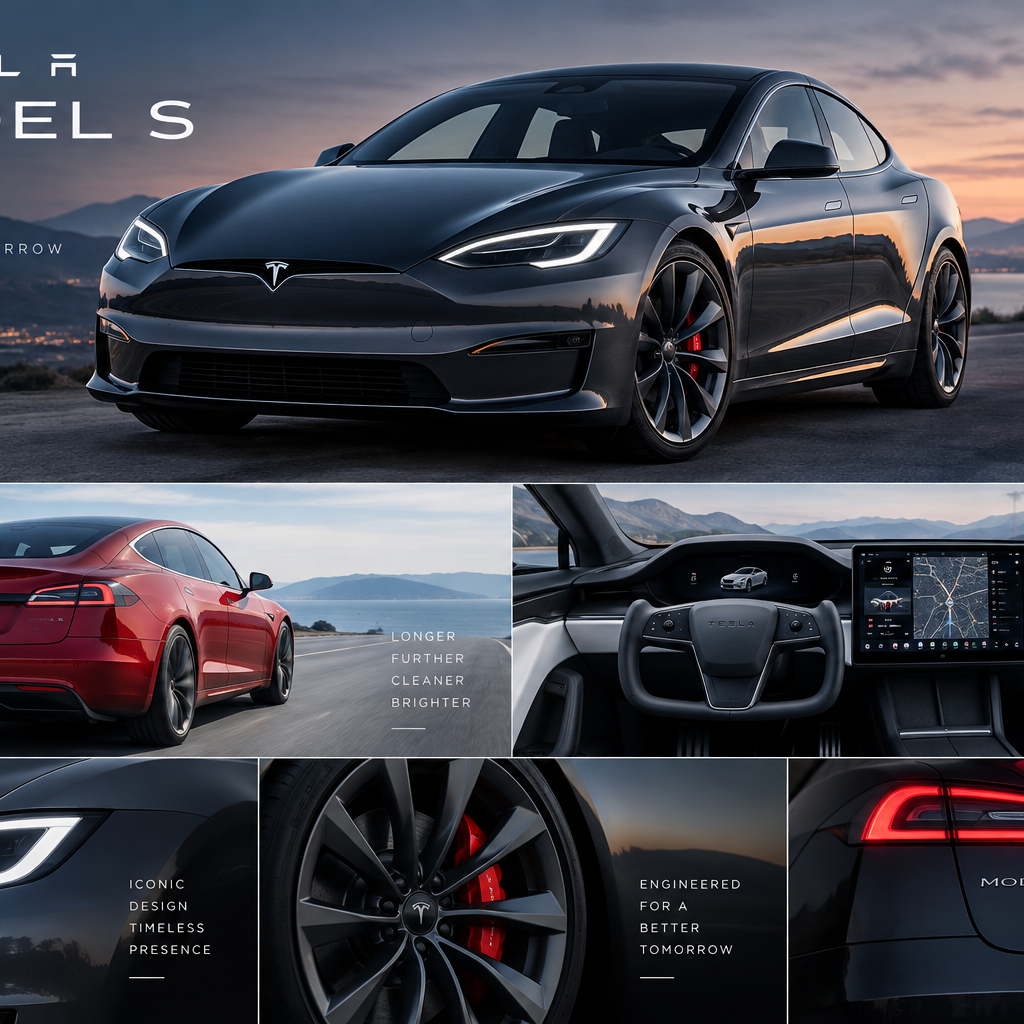
At TechWorldsHub, we’re taking a closer look at its performance, battery technology, charging, interior, software, practicality, and the reasons the Model S remains an important vehicle in the electric-car revolution.
Tesla Model S at a Glance
| Feature | Tesla Model S |
|---|---|
| Vehicle Type | Premium all-electric sedan |
| Powertrain | Fully electric |
| Drive | All-wheel drive on current configurations |
| Performance Version | Model S Plaid |
| Motors | Multiple electric motors depending on version |
| Battery | Large lithium-ion battery pack |
| Charging | AC charging + compatible DC fast charging |
| Key Strength | Performance, range, software and technology |
| Infotainment | Large central touchscreen |
| Software Updates | Over-the-air capability |
| Regenerative Braking | Yes |
| Manufacturer | Tesla |
Specifications, features, range, pricing and configurations can vary by model year and market.
A Car That Changed Expectations
The importance of the Model S becomes clearer when considering the EV market that existed around its introduction.
Earlier electric cars often prioritized efficiency and environmental considerations over performance, luxury, or long-distance capability.
Tesla approached the problem differently.
Instead of trying to make an electric version of a conventional economy car, the company developed a large premium vehicle designed around an electric architecture.
The battery could be positioned beneath the passenger compartment, while electric motors eliminated the need for a traditional combustion engine and many associated components.
This architecture created several advantages.
A low-mounted battery helps create a low center of gravity. Electric motors can deliver immediate torque. The absence of a large engine can create additional storage opportunities, while software can control many vehicle systems.
The Model S demonstrated that an electric vehicle could be desirable because of its technology and performance—not simply because it didn’t use gasoline.
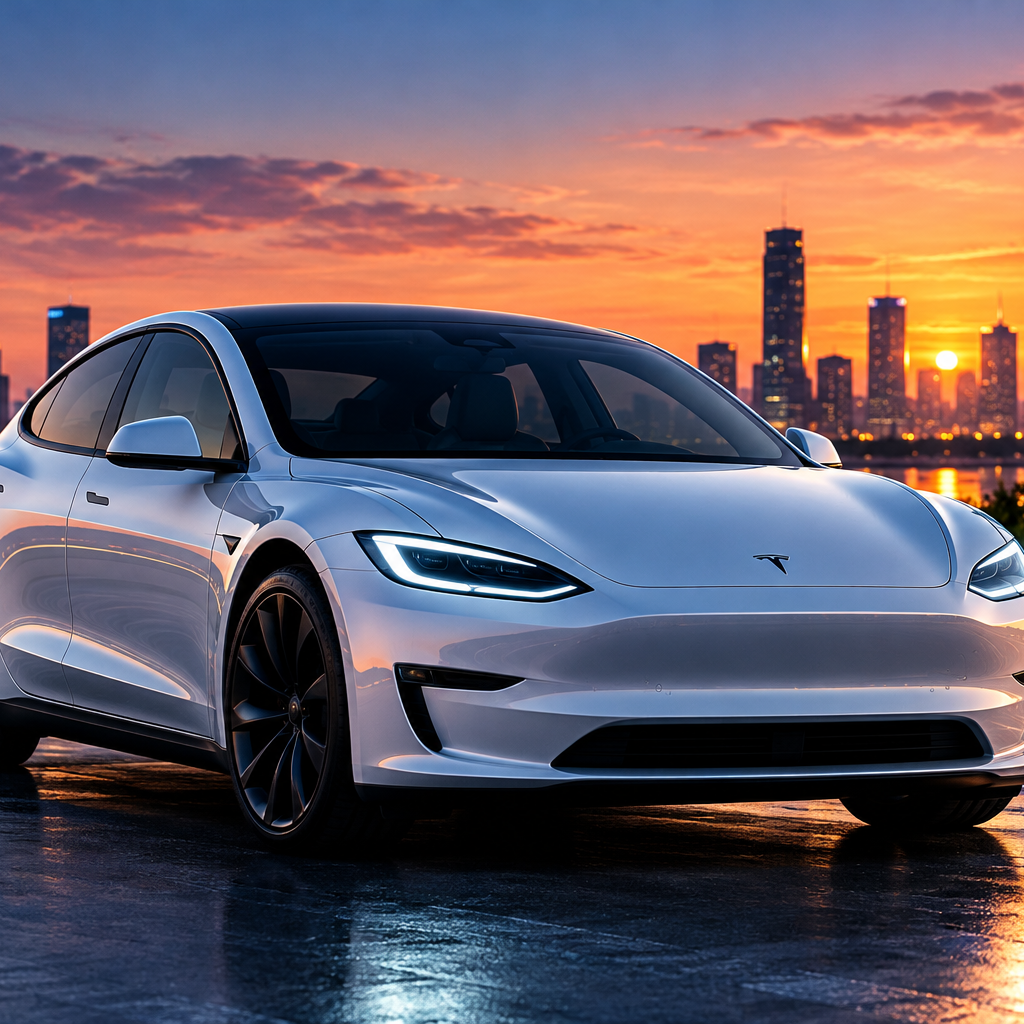
Model S Plaid Performance
Supercar Acceleration in a Four-Door Sedan
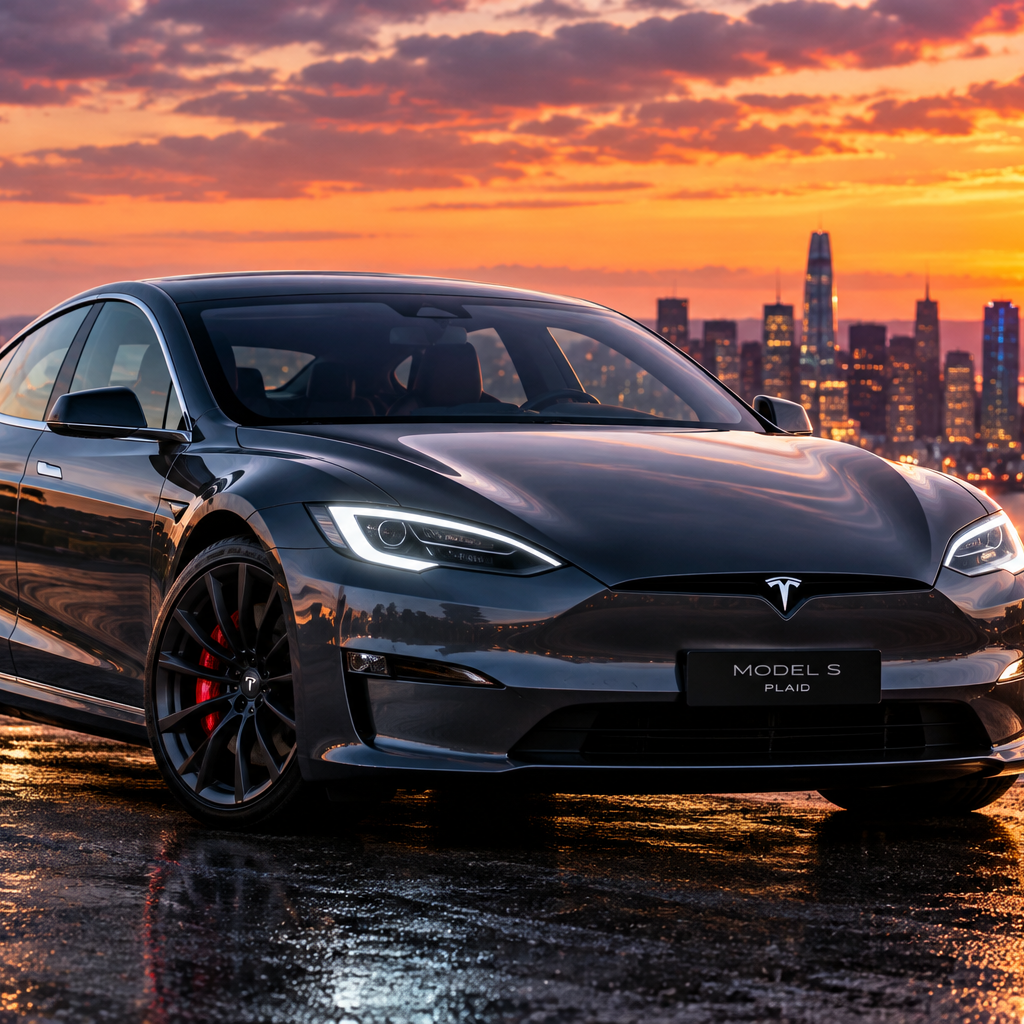
The Model S Plaid is the performance flagship of the range and one of the most remarkable examples of electric acceleration.
Its multi-motor architecture allows enormous power to be delivered through all four wheels.
Electric motors have a fundamental performance advantage: extremely rapid response.
A combustion engine must operate through a range of engine speeds and usually works with a transmission to keep the engine within an effective power band.
An electric motor can deliver strong torque almost immediately.
Combine that characteristic with all-wheel-drive traction and sophisticated electronic control, and the result can be extraordinary standing-start acceleration.
What makes the Model S Plaid particularly unusual is that this performance exists in a practical four-door vehicle.
This isn’t a tiny two-seat exotic car designed exclusively around speed.
It remains a sedan capable of carrying passengers and luggage.
That combination is central to the Model S Plaid’s appeal.
Electric Motors and All-Wheel Drive
Electric powertrains provide engineers with flexibility that can be difficult to achieve using traditional mechanical systems.
Instead of relying on one engine and a complex mechanical drivetrain to distribute power, an EV can use multiple motors.
The Model S uses electric all-wheel-drive technology, while the Plaid configuration takes the multi-motor approach further.
Electronic control allows the vehicle to manage power delivery rapidly according to traction and performance requirements.
This is one of the reasons modern high-performance EVs can launch so effectively.
There is no dramatic wheelspin required to create excitement.
Computers, motors, tires, and traction systems work together to deploy enormous amounts of performance.
Battery Technology
The Heart of the Model S
The battery pack is one of the most important components of any electric vehicle.
It determines how much energy the car can store and significantly influences range, performance, weight, charging, and cost.
However, battery capacity alone doesn’t determine whether an EV is efficient.
Vehicle aerodynamics, motor efficiency, software, temperature management, tire choice, driving conditions, and numerous other factors influence how far the vehicle can travel.
Battery thermal management is particularly important in a high-performance EV.
Hard acceleration and fast charging can generate heat.
The vehicle needs to keep its battery within suitable operating temperatures to maintain performance and protect the system.
Tesla’s experience developing battery management and electric powertrains has therefore been an important part of the Model S story.
Range and Efficiency
A high-performance electric vehicle isn’t particularly useful if its battery disappears after a short journey.
This is where the Model S has historically differentiated itself.
Tesla has focused heavily on extracting useful driving range from its battery systems through a combination of aerodynamics, efficient electric motors, software, and energy management.
Real-world EV range can vary substantially.
Driving at sustained high speeds generally consumes more energy.
Cold temperatures can affect efficiency.
Aggressive acceleration increases consumption.
Climate-control use, wheels, tires, elevation changes, and weather can also influence results.
For buyers, this means an advertised range figure should be treated as a standardized comparison point rather than a guarantee of identical real-world performance.
The Model S remains interesting because it attempts to combine strong range with extremely high performance.
Charging the Tesla Model S
Charging is one of the most important aspects of electric-car ownership.
For everyday use, many EV owners can charge at home. This changes the traditional fueling experience considerably.
Instead of driving somewhere specifically to refuel, the vehicle can recover energy while parked.
Long-distance travel creates different requirements.
Fast charging becomes important because drivers want to add significant useful range without waiting for extended periods.
Tesla’s charging ecosystem has historically been one of the major components of the company’s EV strategy.
The Model S can use compatible fast-charging infrastructure to replenish its battery during longer journeys.
However, charging speed isn’t constant.
Battery temperature and state of charge can influence the rate, and charging commonly becomes slower as the battery approaches a high state of charge.
This is why efficient route planning can be important during long EV journeys.
Regenerative Braking
The Model S also takes advantage of one of the most useful features of electric powertrains: regenerative braking.
When a conventional car slows down using friction brakes, much of its kinetic energy becomes heat.
Electric vehicles can recover some of that energy.
When the driver releases the accelerator, the electric motors can help slow the vehicle while operating as generators.
Some of the recovered energy can then be returned to the battery.
Strong regeneration also changes the driving experience.
Drivers can often control a substantial amount of acceleration and deceleration using the accelerator pedal.
This is commonly referred to as one-pedal driving.
Once a driver becomes accustomed to it, the experience can feel natural and smooth.
Minimalist Interior
Step inside the Model S and the philosophy is very different from that of many traditional luxury sedans.
Rather than filling the dashboard with large numbers of physical buttons, Tesla places considerable emphasis on digital controls and displays.
The large central touchscreen serves as the primary interface for many vehicle functions.
This creates a clean and futuristic appearance.
Supporters appreciate the simplicity.
Others may prefer dedicated physical controls for frequently used functions.
This makes the Model S interior an interesting example of a larger debate occurring throughout the automotive industry.
How much control should move to touchscreens?
Manufacturers increasingly need to balance visual simplicity and software flexibility against usability and driver distraction.
Infotainment and Software
A Software-First Approach to the Car
Software is one of the areas where Tesla has had a major influence on the automotive industry.
Traditional vehicles were historically treated primarily as mechanical products.
Once they left the factory, their functionality changed relatively little.
The Model S helped popularize a different approach.
Over-the-air software updates can allow compatible vehicle systems to receive improvements without requiring every change to be performed during a traditional workshop visit.
Software also manages numerous aspects of the Model S experience.
Navigation, charging information, climate settings, entertainment, vehicle configuration, energy monitoring, and other features are integrated into the digital ecosystem.
This software-focused philosophy has influenced competitors throughout the industry.
Modern manufacturers increasingly talk about the software-defined vehicle—a concept Tesla helped bring into mainstream automotive discussion.
Driver-Assistance Technology
Tesla is also closely associated with advanced driver-assistance technology.
Modern vehicles can use cameras, computing hardware, and software to assist drivers with certain aspects of driving.
Depending on vehicle configuration, software version, market, and applicable regulations, capabilities can differ.
It is important to distinguish driver-assistance technology from fully autonomous driving.
Drivers should always understand the capabilities and limitations of the specific system they are using and follow the manufacturer’s instructions and local laws.
The broader technological significance is undeniable.
Vehicles are becoming increasingly capable of analyzing the road around them, and computing power is becoming an important part of automotive safety and convenience.
Model S vs Traditional Performance Sedan
| Area | Tesla Model S | Traditional Performance Sedan |
|---|---|---|
| Power Source | Electricity | Gasoline/hybrid varies |
| Power Delivery | Immediate electric response | Builds with engine speed |
| Transmission | No conventional multi-speed gearbox | Usually automatic/DCT |
| Refueling | Battery charging | Fuel station |
| Regenerative Braking | Yes | Limited/none unless hybrid |
| Software Focus | Very high | Increasing rapidly |
| Engine Sound | Minimal powertrain sound | Major part of experience |
| Acceleration | Extremely strong in Plaid | Strong but drivetrain-dependent |
| Updates | Extensive software capability | Varies by manufacturer |
Neither approach is automatically better for every driver.
They provide fundamentally different experiences.
Practicality
One of the Model S’s greatest advantages over traditional exotic performance cars is practicality.
It offers four doors, useful passenger space, and cargo capacity suitable for normal life.
The absence of a conventional engine can also provide additional storage at the front of the vehicle.
This means a Model S Plaid can offer extraordinary acceleration without requiring owners to accept all the compromises normally associated with an exotic supercar.
You can experience extreme performance and still carry passengers and luggage.
That combination helped redefine what a high-performance vehicle could be.
Where the Model S Faces Competition
The premium electric market is much more competitive today than when the Model S originally established itself.
Traditional luxury manufacturers and newer EV companies now offer sophisticated electric sedans and performance vehicles.
Competition increasingly focuses on more than acceleration.
Interior quality, ride comfort, charging, efficiency, software, driver-assistance systems, design, handling, refinement, and customer experience all matter.
This competition is positive for consumers.
Tesla’s success pushed established manufacturers to take EVs more seriously, and increasing competition now pushes Tesla to continue improving.
Why the Tesla Model S Matters
Even readers who prefer combustion-powered cars can recognize the Model S’s influence.
It helped prove that electric cars could be:
Fast
Desirable
Technologically advanced
Long-distance capable
Premium
Practical
It also helped accelerate broader industry interest in large-scale EV development.
Many of the conversations dominating today’s automotive market—charging infrastructure, battery technology, software-defined vehicles, electric performance, and over-the-air updates—became much more prominent as cars like the Model S gained popularity.
Final Thoughts
The Tesla Model S is more than an electric luxury sedan.
It represents a major change in how cars can be designed and experienced.
The Model S combines electric motors, battery technology, advanced software, connectivity, regenerative braking, long-distance capability, and exceptional performance within a practical four-door package.
The Model S Plaid pushes that formula to an extreme, demonstrating that electric vehicles can deliver acceleration once associated almost exclusively with exotic performance cars.
Competition has become much stronger, and the EV market will continue changing rapidly. New battery technologies, charging systems, electric platforms, and increasingly sophisticated software will continue challenging today’s leaders.
But regardless of how the market develops, the Model S has already secured an important place in automotive history.
It helped transform the electric car from an alternative form of transportation into a serious performance and technology platform.
TechWorldsHub — Cars. Performance. Technology. The Future.